
Uterine Fibroids: Symptoms, Treatment Options & When Surgery Helps
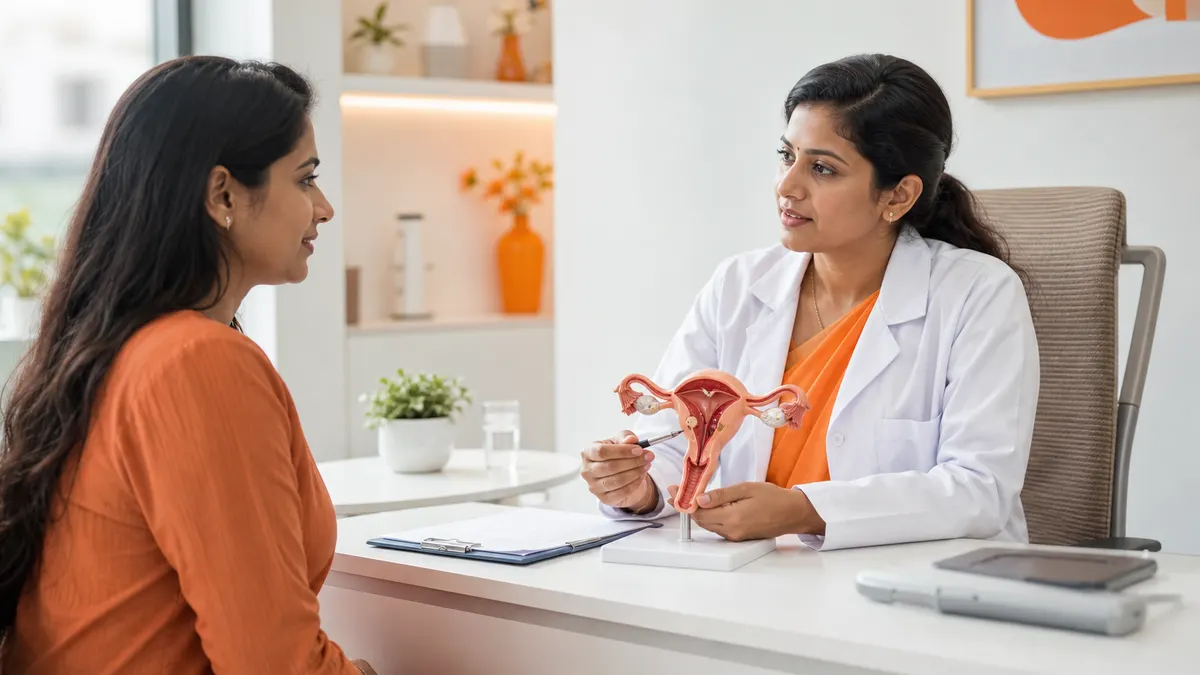
By Dr. Prithivi Perum, Obstetrician, Gynecologist, Fertility Expert & Laparoscopic and Robotic Surgeon at Mathrutva Women Healthcare, Manikonda, and Medicover Women & Child Hospitals, Hyderabad.
Quick answer: Uterine fibroids are non-cancerous growths of the uterus. Many cause no problems; others lead to heavy bleeding, pelvic pressure, pain, or fertility issues. Treatment ranges from observation and medicines to laparoscopic or robotic myomectomy - chosen based on size, location, symptoms, and pregnancy plans.
In Hyderabad clinics - including Mathrutva Women Healthcare in Manikonda - fibroids are among the most common reasons women seek help for heavy periods and pelvic discomfort. Under the care of Dr. Prithivi Perum, evaluation focuses on your symptoms, ultrasound findings, and whether you want to preserve fertility.
What Are Uterine Fibroids?
Fibroids (leiomyomas) grow from the muscle wall of the uterus. They may be small and silent or large enough to distort the uterine cavity. Types include submucosal (inside the cavity), intramural (within the wall), and subserosal (on the outer surface). Location often matters more than size for bleeding and fertility.
Common Symptoms
- Heavy or prolonged menstrual bleeding
- Pelvic pressure, fullness, or lower backache
- Frequent urination if the fibroid presses on the bladder
- Pain during periods or intercourse
- Difficulty conceiving or recurrent pregnancy loss in some cases
- Anaemia from chronic blood loss - fatigue, dizziness, breathlessness
Not every fibroid needs treatment. If periods are manageable and there is no anaemia or fertility concern, monitoring may be enough.
How Fibroids Are Diagnosed
Diagnosis usually starts with a pelvic examination and ultrasound. In selected cases, MRI or hysteroscopy helps map the cavity before surgery. Blood tests check for anaemia. At Mathrutva fibroid care, we match imaging to a clear treatment plan rather than ordering unnecessary tests.
Treatment Options
Options depend on your age, symptoms, fibroid type, and desire for pregnancy:
- Watchful waiting - small, asymptomatic fibroids
- Medicines - hormonal therapy, antifibrinolytics, or iron for anaemia
- Hysteroscopic removal - for suitable submucosal fibroids
- Laparoscopic / robotic myomectomy - uterus-preserving surgery for larger or multiple fibroids
- Hysterectomy - definitive option when childbearing is complete and symptoms are severe
When Surgery Helps
Surgery is considered when bleeding affects quality of life, anaemia persists, fibroids grow rapidly, or they interfere with fertility. Minimally invasive laparoscopic and hysteroscopic surgery often means smaller scars, less pain, and faster recovery than open surgery. Robotic approaches may help in complex myomectomy cases.
“Fibroid care is not one-size-fits-all. The right plan protects your health, your fertility goals, and your daily comfort.”
- Dr. Prithivi Perum
Fibroids and Fertility
Submucosal fibroids and some large intramural fibroids can affect implantation and pregnancy. If you are trying to conceive, a fertility-focused evaluation helps decide whether medical management or myomectomy is wiser first. Related reading: fertility enhancement surgery.
Summary
Uterine fibroids are common, usually benign, and treatable. Symptoms, imaging, and life goals guide whether you need monitoring, medicines, or surgery. Early evaluation prevents prolonged anaemia and unnecessary worry.
Key Takeaways
- Heavy periods and pelvic pressure are classic fibroid clues - get an ultrasound.
- Not all fibroids need surgery; many respond to medicines or observation.
- Myomectomy can preserve the uterus for future pregnancy.
- Minimally invasive surgery shortens recovery for many women.
Related Services
Disclaimer
This content is for educational purposes only and should not replace medical consultation. Please contact your doctor for personalised advice.
Need care in Hyderabad? Book a consultation with Dr. Prithivi Perum at Mathrutva, Manikonda.