
Endometriosis: New Minimally Invasive Treatments Every Woman Should Know
By Dr. Prithivi Perum, Consultant Gynecologist, Fertility Expert & Laparoscopic and Robotic Surgeon at Mathrutva Women Healthcare, Manikonda, and Medicover Women & Child Hospitals, Hyderabad.
Quick answer: Endometriosis is a condition where tissue similar to the uterine lining grows outside the uterus, causing pain, heavy periods, and sometimes infertility. In 2026, minimally invasive surgery - especially laparoscopic and robotic excision - offers precise treatment with faster recovery than open surgery. Many women also manage symptoms with hormonal therapy and lifestyle support.
Endometriosis is one of the most common yet underdiagnosed conditions affecting women in India. Millions live with chronic pelvic pain, painful periods, or fertility struggles without knowing the cause. In urban centres like Manikonda, Hyderabad, awareness is growing - but many women still wait years before seeking specialist care. Under the guidance of Dr. Prithivi Perum at Mathrutva Women Healthcare, patients receive advanced, minimally invasive solutions designed to relieve pain, protect fertility, and restore quality of life.
Understanding What Endometriosis Really Is
Endometriosis occurs when tissue similar to the endometrium - the lining inside the uterus - grows outside the uterine cavity. These deposits can appear on the ovaries, fallopian tubes, outer surface of the uterus, bowel, bladder, and the lining of the pelvis (peritoneum). Like normal uterine lining, this tissue responds to hormonal changes during the menstrual cycle. It thickens, breaks down, and bleeds - but because it has no way to leave the body, it causes inflammation, scarring, and adhesions.
The result is often intense pelvic pain, especially during periods, and in some cases, difficulty conceiving. Endometriosis is not an infection or cancer, though it can significantly affect physical and emotional wellbeing. It is estimated to affect roughly 1 in 10 women of reproductive age worldwide, though many cases go undiagnosed for 7 to 10 years on average.
How Endometriosis Differs From Normal Period Pain
Mild cramping during menstruation is common. Endometriosis pain is different. It is often severe enough to interfere with work, school, or daily activities. Pain may begin before the period starts and continue after it ends. Some women experience pain during intercourse, bowel movements, or urination - especially around menstruation. If painkillers barely help and you regularly miss work during your cycle, endometriosis should be considered.
Stages and Severity
Doctors classify endometriosis into stages (I to IV) based on the location, depth, and extent of lesions, plus the presence of cysts and adhesions. Stage does not always match symptom severity - a woman with minimal disease can have severe pain, while another with extensive disease may have mild symptoms. This is why a thorough clinical evaluation matters more than stage alone.
Why Minimally Invasive Options Are Becoming the Standard
For decades, open abdominal surgery (laparotomy) was the main surgical approach for endometriosis. It required a large incision, longer hospital stays, more pain, and weeks of recovery. Today, minimally invasive techniques have largely replaced open surgery for most patients.
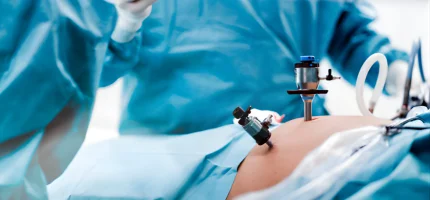
Minimally invasive procedures use small incisions - typically 5 to 10 mm - through which a camera and specialised instruments are inserted. High-definition imaging gives surgeons a detailed view of the pelvis. This allows precise identification and removal of endometriotic tissue while sparing healthy structures.
The benefits are clear and well documented:
- Less post-operative pain - Smaller incisions mean less tissue trauma.
- Shorter hospital stay - Many patients go home the same day or within 24 hours.
- Faster return to daily life - Most women resume normal activities within 1 to 2 weeks.
- Reduced scarring - Tiny scars heal quickly and are barely visible.
- Lower infection risk - Smaller wounds carry fewer complications.
- Better visualisation - Magnified views help surgeons find hidden or deep lesions.
At Mathrutva, Dr. Prithivi Perum combines laparoscopic and robotic expertise with a fertility-focused approach, so treatment is tailored to each woman's symptoms, disease severity, and reproductive goals.
Laparoscopic Excision: A Breakthrough for Accurate Removal
Laparoscopic excision surgery is widely regarded as the gold standard for surgical treatment of endometriosis. Unlike ablation - which burns surface lesions - excision involves cutting out the diseased tissue completely, including deep infiltrating endometriosis (DIE). This approach reduces the chance of recurrence and often provides longer-lasting pain relief.
During the procedure, the surgeon makes 3 to 4 small incisions in the abdomen. A laparoscope (thin camera) provides a magnified view of the pelvic organs. Specialised instruments are used to carefully remove endometriotic implants, adhesions, and endometriomas (chocolate cysts on the ovaries) while preserving healthy ovarian tissue whenever possible.
What to Expect Before and After Laparoscopy
Before surgery, your doctor will review your symptoms, perform an examination, and may order ultrasound or MRI to map the disease. Blood tests and anaesthesia clearance are standard. The procedure is done under general anaesthesia and typically takes 1 to 3 hours depending on complexity.
After surgery, most women experience mild to moderate soreness for a few days. Light walking is encouraged early. Full recovery usually takes 1 to 2 weeks for routine cases and up to 4 to 6 weeks for extensive disease. Pain improvement is often noticeable within the first few menstrual cycles, though results vary by patient.
Dr. Prithivi Perum uses advanced laparoscopic excision techniques at Mathrutva to ensure thorough removal of lesions - a critical factor for both pain relief and fertility preservation. Learn more about our laparoscopic surgery services.
Robotic-Assisted Surgery for Complex Cases
For women with severe or deeply infiltrating endometriosis - especially when the bowel, bladder, ureters, or diaphragm are involved - robotic-assisted surgery offers additional precision. The da Vinci surgical system gives the surgeon enhanced 3D visualisation, wristed instrument movement, and tremor filtration, allowing delicate work in tight pelvic spaces.
Robotic surgery is not automatically better for every case. It is most valuable when:
- Endometriosis involves multiple organ systems
- Deep pelvic lesions are difficult to reach with standard laparoscopy
- Previous surgeries have created dense adhesions
- Patients require complex excision with reconstruction
The robotic approach uses the same small-incision philosophy as conventional laparoscopy. Patients benefit from reduced blood loss, less scarring, and often a quicker return to normal function compared with open surgery. Recovery timelines are similar to standard laparoscopy for most patients.
At Mathrutva and Medicover Hospitals, Dr. Prithivi Perum applies robotic-assisted excision for select complex cases, always prioritising complete disease removal and organ preservation. For more on this technology, read our article on the rise of robotic surgery in gynecology.
Non-Surgical Minimally Invasive Options
Not every woman with endometriosis needs surgery - at least not immediately. Medical management can effectively control symptoms, slow disease progression, and buy time for women who are not ready for surgery or who wish to conceive soon.
Hormonal Therapies
Because endometriosis tissue responds to oestrogen, hormonal treatments that suppress or regulate oestrogen can reduce lesion activity and pain:
- Combined oral contraceptives - Help regulate cycles and reduce menstrual pain.
- Progestins - Oral, injectable, or implant forms thin endometriotic tissue.
- Hormonal IUDs (e.g., levonorgestrel) - Provide local hormone release with minimal systemic effects.
- GnRH agonists or antagonists - Temporarily reduce oestrogen to menopausal levels; used for short courses.
- Dienogest - A progestin specifically approved for endometriosis in many countries.
Pain Management and Supportive Care
NSAIDs (non-steroidal anti-inflammatory drugs) are often the first line for period pain. Pelvic physiotherapy, nerve-pain medications, and heat therapy can complement medical treatment. Some women benefit from dietary changes that reduce inflammation.
A combined approach is common: medication to manage symptoms while planning timed surgery for severe lesions, or medical therapy after surgery to prevent recurrence. Your treatment plan should reflect your age, symptom severity, fertility goals, and personal preferences.
How Early Intervention Improves Fertility Outcomes
Endometriosis is a leading cause of infertility. It can affect fertility in several ways - by distorting pelvic anatomy, blocking fallopian tubes, forming ovarian cysts that reduce egg reserve, creating an inflammatory environment hostile to fertilisation, and causing pain that makes regular intercourse difficult.
Delaying diagnosis and treatment can worsen these effects over time. Endometriomas, for example, can reduce ovarian reserve if they grow large or if surgery is not performed carefully. Early evaluation gives your doctor a clearer picture of your reproductive potential and more options for intervention.
Fertility-Focused Surgical Principles
When surgery is needed in women who want to conceive, the surgeon must balance thorough excision with ovarian preservation. Aggressive removal of ovarian cyst wall can damage healthy follicles. Experienced fertility surgeons like Dr. Prithivi Perum use techniques that maximise disease clearance while protecting egg supply.
After surgery, many women conceive naturally within 6 to 12 months. Others may need assisted reproduction (IUI or IVF) depending on age, partner factors, and remaining disease. Timely referral to a fertility specialist improves planning and outcomes.
If you are trying to conceive, explore our fertility consultation services and dedicated endometriosis treatment programme at Mathrutva.
Living With Endometriosis: Lifestyle Support & Long-Term Care
Medical and surgical treatment form the foundation of endometriosis care - but lifestyle choices can meaningfully support symptom control and overall wellbeing. While no diet or exercise plan cures endometriosis, evidence suggests certain habits help many women feel better.
- Anti-inflammatory nutrition - Emphasise vegetables, fruits, whole grains, omega-3 fats (fish, flaxseed), and limit processed foods and excess red meat.
- Regular movement - Gentle exercise such as walking, swimming, or yoga can reduce pain perception and improve mood.
- Stress management - Chronic stress can amplify pain. Mindfulness, breathing exercises, and adequate sleep support hormonal balance.
- Pelvic physiotherapy - Specialised therapists can address muscle tension and nerve sensitivity linked to chronic pelvic pain.
- Consistent follow-up - Endometriosis can recur. Regular check-ups help catch flare-ups early and adjust treatment.
Mathrutva's patient-centred model ensures that every woman receives a personalised long-term plan - not just a one-time procedure. Emotional support matters too. Chronic pain conditions affect mental health, and counselling or support groups can be valuable additions to medical care.
“Endometriosis is treatable. With modern minimally invasive techniques - laparoscopic and robotic excision - women can experience significant relief while protecting their fertility and quality of life. The key is not to suffer in silence.”
- Dr. Prithivi Perum
When Should You Seek Medical Help?
Do not dismiss severe period pain as normal. Seek evaluation if you experience any of the following:
- Pelvic pain that limits daily activities or requires regular painkillers
- Periods that last longer than 7 days or are very heavy
- Pain during or after sexual intercourse
- Painful bowel movements or urination, especially during menstruation
- Difficulty conceiving after 12 months of trying (or 6 months if over 35)
- Chronic fatigue, bloating, or nausea linked to your cycle
- A family history of endometriosis or early hysterectomy for pain
Early consultation at Mathrutva, Manikonda can lead to faster diagnosis - often through clinical assessment, pelvic ultrasound, and when needed, diagnostic laparoscopy. The sooner you understand your condition, the more options you have for effective, minimally invasive treatment.
Summary
Endometriosis is a common inflammatory condition where uterine-like tissue grows outside the uterus, causing pain, heavy bleeding, and infertility. Diagnosis is often delayed because symptoms overlap with other conditions. In 2026, minimally invasive surgery - particularly laparoscopic and robotic excision - has become the preferred surgical approach, offering precise lesion removal with faster recovery than open surgery. Non-surgical options including hormonal therapy, pain management, and lifestyle changes play an important role, especially for women not ready for surgery or those planning pregnancy. Early intervention protects ovarian reserve and improves fertility outcomes. A personalised, long-term care plan combining medical, surgical, and supportive strategies gives women the best chance of lasting relief.
Key Takeaways
- Endometriosis affects an estimated 1 in 10 women - severe period pain is not something you must simply endure.
- Laparoscopic excision is the gold standard for surgical treatment; it removes disease rather than just burning surface lesions.
- Robotic-assisted surgery offers added precision for complex or deeply infiltrating endometriosis.
- Not all cases need surgery - hormonal therapy and pain management are effective for many women.
- Early diagnosis and treatment protect fertility and reduce the risk of disease progression.
- Lifestyle support, physiotherapy, and regular follow-up are essential parts of long-term care.
If you suspect endometriosis or want to explore minimally invasive treatment options, book a consultation with Dr. Prithivi Perum at Mathrutva Women Healthcare, Manikonda. You can also contact the clinic directly to schedule an appointment.
Related Services
References & External Resources
Disclaimer
This content is for educational purposes only and should not replace medical consultation. Treatment outcomes vary by patient. Please contact your doctor for personalised advice.
Take control of your pelvic health - book an appointment with Dr. Prithivi Perum at Mathrutva, Manikonda today.