
Bleeding After Menopause: Causes and When to See a Gynecologist
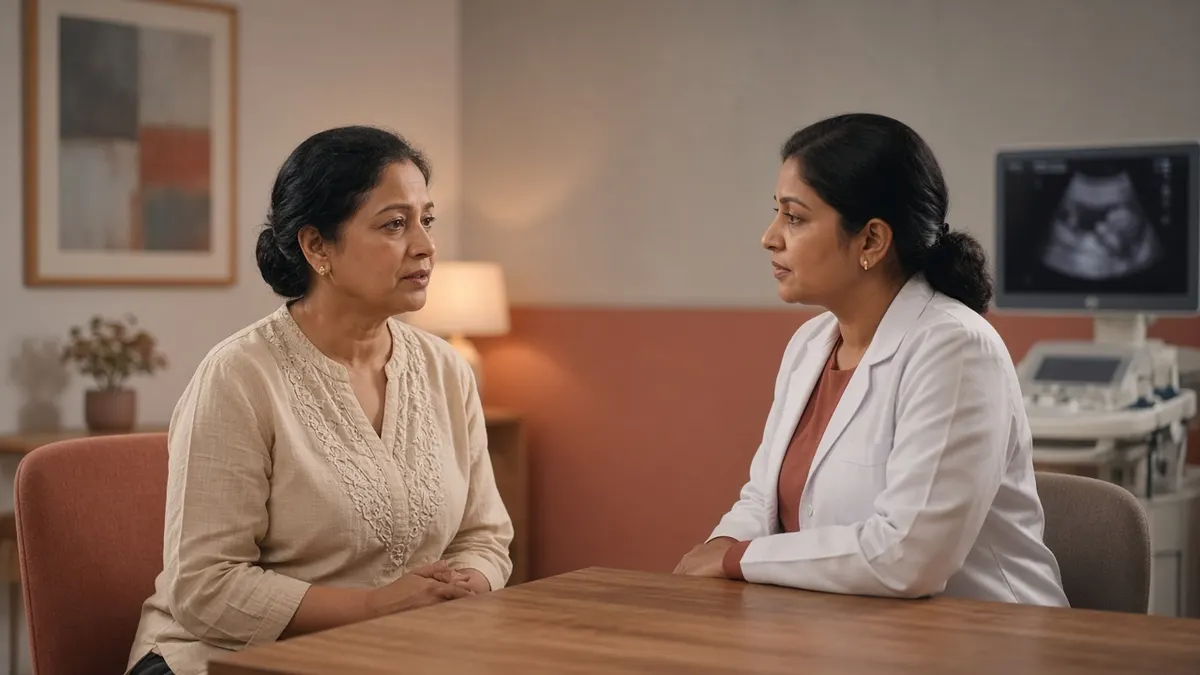
By Dr. Prithivi Perum, Obstetrician, Gynecologist, Fertility Expert & Laparoscopic and Robotic Surgeon at Mathrutva Women Healthcare, Manikonda, and Medicover Women & Child Hospitals, Hyderabad.
Quick answer: Vaginal bleeding 12 months after your last period is postmenopausal bleeding. It is often from a thin vaginal lining, a polyp, or hormone changes, and it can occasionally be a sign of endometrial precancer or cancer. Any amount, even spotting, should be assessed. Do not wait for it to happen again.
Menopause is confirmed when periods have stopped for 12 months and there is no other reason, such as pregnancy, hormones, or a procedure that stopped bleeding. Bleeding after that point is a symptom, not a “late period.” Dr. Prithivi Perum evaluates it at Mathrutva Women Healthcare in Manikonda, alongside menopause care.
What Counts as Bleeding After Menopause
- Bright red bleeding, brown discharge, or spotting on underwear
- Bleeding after sex
- Bleeding that starts after you begin or change menopausal hormone therapy
If you are still in perimenopause and cycles are irregular, the approach is different - see menstrual health. Once 12 period-free months have passed, new bleeding is investigated.
Common Causes
The most frequent finding is genitourinary syndrome of menopause: thin, dry vaginal and uterine lining that bleeds easily. Polyps and fibroids can also bleed. Hormone therapy can cause expected spotting in the first months, which should still be reported so it can be judged against your regimen. Less often, the lining of the uterus is thickened or shows precancer or cancer. Finding that early is the reason the visit should not be delayed.
How It Is Checked
The visit includes a history, a pelvic exam, and usually a transvaginal ultrasound to measure the uterine lining. A thin lining in the right clinical setting is reassuring. A thicker lining, an unclear scan, or repeated bleeding leads to a tissue sample - an endometrial biopsy in clinic, or a hysteroscopy if a polyp needs to be seen and removed. The cervix is checked as well, because bleeding can come from there. Cervical screening is updated if it is due - see cervical cancer screening.
“Most women with postmenopausal spotting do not have cancer. Every woman with that symptom still deserves a proper look, because the few who do need to be found early.”
- Dr. Prithivi Perum
Treatment Depends on the Cause
Vaginal estrogen or non-hormonal moisturisers help atrophy once serious causes are excluded. A polyp can be removed by hysteroscopy. Thickened or abnormal lining is treated according to the biopsy - observation, hormones, or surgery such as hysterectomy only when that is the right treatment for the diagnosis. Hormone therapy is adjusted rather than stopped in panic if the bleeding fits a known pattern and the lining has been checked.
Women from Manikonda, Puppalaguda, Narsingi, Gachibowli, and Kondapur can book an evening consultation. Bring a list of medicines, including any hormone tablets, patches, or vaginal creams.
Summary
Bleeding after menopause is a reason to see a gynecologist promptly. Most causes are benign. Ultrasound and, when needed, a biopsy separate those causes from the ones that need surgery.
Key Takeaways
- One episode of spotting after 12 period-free months is enough to book a visit.
- Ultrasound measures the lining; biopsy is added when the scan or the story needs it.
- Vaginal dryness is common and treatable after cancer is ruled out.
- Bring your hormone-therapy details to the appointment.
Related Services
Disclaimer
This content is for educational purposes only and should not replace medical consultation. Please contact your doctor for personalised advice.
Need care in Manikonda, Puppalaguda, Gachibowli, or elsewhere in Hyderabad? Book a consultation with Dr. Prithivi Perum at Mathrutva, 1st floor Rukmini Complex, Lalamma Gardens, Puppala Guda, Manikonda, Hyderabad 500089. Call +91 9949666905. Evening hours: Monday to Saturday, 5:00 PM to 9:00 PM.